Thursday, January 26, 2012

Egypt: January 25 anniversary demonstrations


from guardian
A young man gives the victory sign in Tahir Square, Cairo
A young man gives the victory sign in Tahir Square, Cairo. Photograph: Jeff J Mitchell/Getty Images

8.48am: Welcome to Middle East Live. Dozens of demonstrations are planned in Egypt to mark the first anniversary of the revolution that toppled president Hosni Mubarak. Amid a heavy security presence the protests are being held to express opposition to the ruling military junta. Jack Shenker and Abdel-Rahman Hussein in Cairo will be providing regular updates through out the day.

Here's a round up of the latest developments in Egypt and elsewhere in the region:

Egypt

• Activists have established multiple starting points from which scheduled marches will set out towards Cairo's Tahrir Square, Ahram reports. The day is expected to witness dozens of separate demonstrations, in which participants plan to hold up pictures of slain activists, Egyptian flags, and lists of outstanding revolutionary demands, it says.

The head of the military junta, Field Marshal Mohamed Hussein Tantawi, has promised to partially lift the country's three-decade-old state of emergency, in a last-ditch effort to bolster public support ahead of the demonstrations.

Human rights campaigners said the law remained in place because police were still allowed to detain anyone suspected of thuggery. Meanwhile, security measures were ramped up at government buildings as Egyptian authorities braced themselves for what is expected to be one of the biggest outbreaks of popular unrest since the fall of Mubarak on Wednesday.

The Egyptian revolution is like the Nile in flood: try keeping that back with barriers and uniforms, writes novelist Ahdaf Soueif.

Ahdaf Soueif

The revolution, which began a year ago on 25 January, has gone everywhere. It has raged and tiraded through some spaces, flowed steadily through others, and seeped into yet more. There is nowhere, nothing, nobody who has not been affected by it.

As the People's Assembly convenes and the Supreme Council of the Armed Forces (Scaf) plots, the revolution continues along the pathways it has created and carves out new ones ...

Nature acts to redress an imbalance that has become dangerous. Only this time nature was human: a flood of people who left their homes and walked peaceably into the squares of their cities to say "no more". No more military rule whether clear or hidden, no more emergency or repressive laws, a restructuring of the police and the security apparatus, the freedom of political prisoners and civilians subjected to court martial. The cleansing of the judiciary. No to corruption. Yes to human rights. And a rearrangement of the economy to privilege the majority.

Parliament, as the elected legislative body, can start delivering on a lot of these. If the military allows it. Or if it gets rid of the military. What will become clear over the coming few weeks is how far parliament – or sections of it – will align itself with the aims of the revolution.

Egypt faces an acute financial crisis that could undermine its political transition, the New York Times reports. Activists focused on forcing Egypt's military rulers to give up power say the economic malaise has become a major obstacle to their cause because so many Egyptians have come to crave a return to stability.

Two of Egypt's best known activists Gigi Ibrahim and Mosa'ab Elshamy, tell the New York Times of their frustration at the lack of genuine change. "Really, what we have achieved was only just to topple Mubarak; we have Mubarak's generals running the country," said Ibrahim. Elshamy, who was arrested at a protest in May said "what I saw in prison made me feel more determined."

Syria

Britain, the US and France are seeking Russian support for a new United Nations security council resolution to endorse Arab demands that Syria's president, Bashar al-Assad, step down. Western countries have, in effect, abandoned attempts to impose UN sanctions on the Assad regime and are hoping for a new consensus for based on an Arab League timetable for a transition of power.The secretary general of the Arab League, Nabil al-Arabi, and Hamed bin Jassem AlThani, the Qatari prime minister, are planning to brief the UN secretary general, Ban Ki-moon, in New York in the next few days.

Barack Obama used his state of the union address to warn Assad that he cannot resist the "wave of change" that has swept across the region.

President Obama 2012 state of the union

I have no doubt that the Assad regime will soon discover that the forces of change cannot be reversed, and that human dignity cannot be denied.

How this incredible transformation will end remains uncertain. But we have a huge stake in the outcome. And while it's ultimately up to the people of the region to decide their fate, we will advocate for those values that have served our own country so well. We will stand against violence and intimidation. We will stand for the rights and dignity of all human beings –- men and women; Christians, Muslims and Jews. We will support policies that lead to strong and stable democracies and open markets, because tyranny is no match for liberty.

Peter Harling from the International Crisis Groups highlights the collective failing over Syria in an excellent analysis of the crisis in Foreign Policy magazine.

If this impasse endures any longer, the struggle could quickly mutate into an open-ended civil war. Although the regime bears most of the responsibility for bringing the situation up to this point, the international community and exiled opposition have no excuse for moving it further along this terrifying path.

Libya

Elders in Bani Walid said they were appointing their own local government after fighters opposed to the National Transitional Council seized control of the town. They denied claims they were loyal to Muammar Gaddafi, and there were no signs of Gaddafi-era green flags, which witnesses earlier said had been hoisted over the town.

Israel and the Palestinian territories

An Israeli military court has ordered the speaker of the Palestinian legislative body to be jailed for six months without trial after he was arrested at a checkpoint last week. Aziz Dweik, a member of Hamas and a senior elected politician, was imprisoned "without charge or legal justification", a statement from his office said. It claimed Israel was attempting to thwart moves towards reconciliation between the rival Palestinian factions Fatah and Hamas.

Tunisia

Persepolis

The trial of a television executive on morality charges for airing the award winning Iranian cartoon Persepolis, is a relic of the despotism that Tunisians protested against, according to Human Rights Watch. The broadcast led to protests in Tunis because it contained a scene depicting God. Now Nabil Karoui, director of Nessma TV, will go on trial in April 19 for airing the film.

9.27am: Excitement is building in Egypt.

Egypt Live Blog. One year later protests continue

Al Jazeera staff and correspondents update you on important developments in Egypt as people commemorate the first anniversary of the revolution that forced Hosni Mubarak from power.

Al Jazeera is not responsible for content derived from external sites.

Egypt's authorities have imposed a travel ban on four members of a US-funded pro-democracy organisation in a row over its activities, a member of an NGO with knowledge of the case told Reuters on Thursday, in a step expected to escalate tensions with the United States.

The four members of the International Republican Institute (IRI) include three US citizens. One is Sam LaHood, the IRI's
Egypt director who is the son of U.S. Transportation Secretary Ray LaHood.

"It is a de facto detention," the member of a non-governmental organisation (NGO) in Cairo told Reuters, requesting anonymity due to the sensitivity of the case.

The judges investigating the case have charged the four with managing an unregistered NGO and being paid employees of an unregistered organisation, charges that could carry up to five years in jail, he said. The IRI had no immediate comment.

The group is in Egypt and has been forbidden to travel outside the country.

US President Barack Obama plans to accelerate the pace of American aid to Egypt, a top State Department official said on Wednesday, as the most populous Arab nation reaches a critical stage in its uncertain transition away from autocratic rule. 

Undersecretary of State Robert Hormats, part of a US delegation that held unprecedented talks last week with Egypt's Muslim Brotherhood, said Washington wanted to provide "more immediate benefits" to Egyptians, who earlier this month conducted their first democratic elections in decades. 

"During this period, we want to be as supportive as we can. This is an historic moment. Egypt's a country of enormous importance," Hormats said.  [Reuters]

Tens of thousands of people are still arriving in Cairo's Tahrir square, our correspondent Mike Hanna reports. The square is already packed with protesters and people who celebrate to one-year anniversary of the revolution.

Tags Tahrir

Egypt is releasing around 3,000 prisoners on the orders of the country's military ruler to mark the one year anniversary of the uprising that toppled Hosni Mubarak, officials have said.

Security officials told AFP news agency on Wednesday that 1,959 prisoners were being released after they were pardoned by Field Marshal Hussein Tantawi on Saturday.

"Another 1,014 charged with criminal acts are also in the process of being released early for good behaviour," one official said.

In the latest development, about 3,000 people, who were pardoned by the military rulers coinciding with the anniversary, have now walked out of Tora prison located on the outskirts of Cairo.

In an apparent attempt to appease reformist demands, the military council has in recent days pardoned people convicted in military courts since Mubarak was toppled.

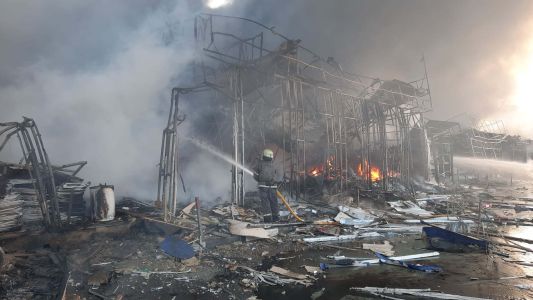
Hosni Mubarak's ouster was only the beginning of a year of protest and unrest in Cairo and elsewhere in Egypt. 

This interactive timeline by Al Jazeera's Gregg Carlstrom highlights the major protests, in Cairo and elsewhere, which began one year ago and have continued to this day. It will play automatically, or you can hover over the markers on the timeline to view a specific protest.


Did Egypt's protesters die in vain?

Relatives of those killed during the uprising say they are still awaiting justice, a year after the violence erupted, Al Jazeera's Malika Bilal reports.

Click here to read more.


Al Jazeera's Adam Makary reports from Suez, which saw the revolution's first death and where the first police station was torched last year:

adamakary

Cairo's Tahrir Square looks to be filled with people as Egypt marks first anniversary of revolution that toppled Mubarak.

For a look back at the 18-day uprising that led to the fall of Mubarak and a look forward at what could be to come in Egypt, visit our spotlight page, where you'll find a scorecard of the revolution so far, our viewer's thoughts on whether the uprising has lived up to its expectations, a look into how relatives of those killed are still seeking justice and more. 

Awakening 7 Beat the Borders and Tantra


Here You can download or embed the show:
http://www.archive.org/details/Awakening7BeatTheBordersAndTantra
We would continue with Beat the Borders in next show as well
MORE INFO BELOW

Awakening i  Polonia   Aktywna
Awakening and Polonia Aktywna
Awakening it's a program on radio patapoe.It's talkactive. It means we talk for more than three hours, mainly about politics,squatting,activism,ecology,tolerance,human and animal rights,punk,spirituality,freedom,love,cultural life in Amsterdam.First we start with the agenda for the squatting scene in Amsterdam( not only),then we have some main subject,sometimes guests.The last ha we do as polish part in this language.The music what we are playing that mainly punk,but this is just as background(package) and in the breaks when we are preparing our self,equipment,material,etc.Patapoe is a pirate, underground,squatters radio. We are playing our program every Tuesday from 3.30pm till ~ 7.00pm. In Amsterdam You can listen us in the ether 88.3 FM and everywhere else on http://www.freeteam.nl/patapoe
If You would like to listen some from our old programs and read description for them go to:
http://ourmediaindymedia.blogspot.com/search/label/Awakening%20program
if You would like listen,download or embed some of our old issues go to:
http://www.archive.org/search.php?query=Awakening7
to download the last show mainly about ecology and solutions for climate change You can go
http://www.archive.org/details/EcoAwakening7
Invitation to our program Awakening in radio patapoe 88.3fm
To all positive organizations &
To whom it may concern,
If you would like to come to on our show called awakening to talk about, ecology, squatting, local politics, food, animal rights you are more than welcome.
Ps: There are also possibilities to make interviews through phone or skype
Pass this information further. Let the media to be free.

some of our older shows

Awakening 7 reading the DIY ,Tantra,Affinity,Raw Food and the Riots

http://www.archive.org/details/Awakening7ReadingTheDiytantraaffinityrawFoodAndTheRiots

http://www.archive.org/details/AwakeningAboutTheRawFood

http://www.archive.org/details/Awakening7AboutValreepYesMenAction

Awakening MP3,agenda,mobilization for squatting days in 1 year of squatting ban.
http://ourmediaindymedia.blogspot.com/2011/09/awakening-mp3agendamobilization-for.html
Awakening MP3,agenda,True Nature,Parmaculture
http://ourmediaindymedia.blogspot.com/2011/09/awakening-mp3agendatrue.html
Yes Men In Valreep
http://ourmediaindymedia.blogspot.com/2011/09/awakening-7-about-yes-men-in-valreep.html
radio awakening every tue from 15.30~19.00 in radio patapoe 88.3 fm (links below)
Beat the Borders, Walk like a Somali!
Invitation for a Public Conspiracy

Young Somali refugees who are forced to survive in the streets
in Holland have taken the lead in organizing demonstrations and
camps to demand their basic human rights. The Dutch right wing
government's drive to harrass undocumented mighrants out of
the country leads to thousands of humans from Somalia, Iran,
Afghanistan, Guinee and other countries having to live on the street.
There is no shelter for them in official centers and the charity shelters
that existed before are at best full or had to close for lack of money.
For the first time in Dutch history a powerful and proud group of
illegalized refugees has taken destiny in its own hands, demanding a
chance to live.
On Friday 20th of January Dutch activists join hands with the Somali
activists for a "Public Conspiratorial Meeting" on how to make a
change in Dutch migration politics.

Together we walk tall!

Date:
January 20th 2012
Venue:
OT301, address Overtoom 301, 1054HW Amsterdam
Open from 4 p.m. Till after Midnight
Public Debate starts at 8.30 p.m.

Live on Webradio Patapoe and M2M Radio

Program and Info at: http://www.vrijheidvanbeweging.nl/beattheborders

Entrance is free for the undocumented
Donations at the door
Bankaccount: 39.02.71.918 St. M2M, Amsterdam ref: Walk like a Somali

"Mogadishu is one of the world's most dangerous places," said Leslie Lefkow,
senior Horn of Africa researcher at Human Rights Watch. "Returning people
there is not just risky; it's a potential death sentence. The Dutch authorities should
quickly reconsider this plan, which is at odds with their obligation to protect those

whose lives are at risk." (July 2010)

Wednesday, January 25, 2012

Joke Kaviaar Poezie.Beat the Borders 7


Oud Papier
Er valt weer een rapport van een geleerde te lezen
We horen dat hij schrijft dat grote twijfels zijn gerezen
Gaat er wat veranderen? 't Is vernietigend als bommen!
Zoveel cijfers en feiten, en tabellen en sommen
De minister zal wel zeggen dat er iets aan wordt gedaan
Een laaggeplaatste krijgt de bons – en dan een betere baan
Of nog niet eens dat! Het is slechts voor 't oud papier
Alleen maar weer beloftes, zo maakt men goede sier
De minister speelt met termen, en bedankt de geleerde
dat hij 't functioneren heeft verbeterd, zich niet tegen hem keerde
En als dan na een tijdje weer de woede is gesust
iedereen 't is vergeten, en iedereen gerust
De minister en de geleerde, zij geven elkaar de hand
We zijn weer in een tijdperk van ware vrede aangeland!

Wat bleef...
Voor wie ergens alles achter zich liet
Wat er nog was –
Vader, moeder?
Een massagraf?
Een hut, een dorp?
Verbrandde resten?
Een stukje land, het graan,
een geit?
Stukgeschoten bruggen
Het dreunen van de nacht
Flarden van kruitdamp

Voor wie alles ergens achterliet
Herinneringen aan toen
Een lang verschoten verleden
dat vertrouwd was
Het zinderen van de grond
Hoe de zon onderging
Waarvandaan de wind kwam
De taal die iedereen sprak,
verstond en begreep
en
het delen van de rijst

Voor wie ergens alles achter zich liet
Gekomen is naar een belofte
van schamel spaargeld
Te voet over een hel van bergen
Wadend in hoge sneeuw
Door elkaar geschud
in het duister
Gekropen door
doornig struikgewas, en zo
bereikte een grens aan het weggaan

Voor wie alles ergens achterliet
maar niet
De schrik van een knal
Bezweet ontwaken
Omkijken, sluipen, verbergen
Dat is er nog
Niet alleen in dromen

Zie, een hart kan men verliezen
voor de liefde, voor de hoop,
Maar verliezen kan men nooit
de haat, de razernij
Geen drank, pillen of drugs,
niets brengt verlossing
Alleen de dood

Voor wie ergens alles achter zich liet
die achtervolgd door die gedachte
dat het achterlaten van 't leven
nog alles is dat overblijft

Voor wie alles ergens achterliet
behalve die sporen –
Verloren raken die nooit –
Nog altijd geen horende oren

Voor wie ergens alles achter zich liet
is ook hier geen verlichting
Geen verlichting van de angst
die mee is getrokken
Geen verlichting van de waanzin
die achterna is gekomen

Voor wie alles achter zich dacht te hebben gelaten
is vooral het vechten meegekomen
naar een land waar vrede zou heersen
De belofte werd bedrog en
voortgezet wordt onopgemerkt
de oorlog tegen hen, en wij

Wij tekenen ervoor


Joke Kaviaar 3 augustus 2010


De stemming

Er zijn er die moorden
uit overtuiging
Een reden hebben zij niet
Wel een boek of geschrift bij de hand
waarin beschreven staat
op welke wijze de reine daad
dient te worden uitgevoerd

De executie, zo zeggen zij,
vindt plaats met instemming
van een bevoegd heer

En zo raken velen overtuigd
van de juistheid en de eerlijkheid
van het stelen van de vrijheid
en van het nemen van levens
Zij stemmen met alles in
dat voorgeschreven wordt
en laten zich ermee vermaken

Er zijn er die sterven
door die overtuiging
Spijt hebben zij niet
van 't verlangen naar vrijheid
dat in geen enkele staat
wordt toegestaan,
moet worden bevochten

De revolutie, zo weten zij,
krijgt nooit toestemming
van een bevoegd heer


Joke Kaviaar, 2 augustus 2010


De tanden van de beambte

Als een overheidsdienaar glimlacht
wanneer hij namens zijn baas het woord voert,
dan liegt hij
Zijn lippen laten wel zijn blinkende tanden zien,
maar dat is reclame

We ruiken niet
de tong die de konten heeft gelikt
We horen niet
het verzwijgen van de opstand,
neergeslagen in zijn baas' opdracht
door collega's van hem die
geen naam hebben, laat staan gezichten,
alleen nummers en maskers

En zo zien we de één na de andere beambte verklaren
in full color op breedbeeld televisie
namens de staat
dat er niet geslagen is
dat er niet geschoten is
dat de camerabeelden helaas
verloren zijn gegaan
Dat het slachtoffer erom gevraagd heeft

Een gezagsdrager treft nooit blaam
Die is aan de naamloze dode of
aan iemand die je niet mag zien staan

Telkens weer die wetmatige regels in de krant
Vette inktkoppen die druipen van bloed:
'Er is niets aan de hand'
Maar wordt er eens terug geslagen,
gespuugd, gescholden, gejoeld,
dan kan niet vaak genoeg
de band worden terug gespoeld

En weer liegt de ambtenaar in staatsnaam
als hij glimlacht en stelt:
'Tot geweld hebben alleen wij het recht'

Conceptagenda General Assembly Occupy Amsterdam Saturday januari 28th, 18:30

Saturday the 28th of January, at 18:30, there will be the next weekly General Assembly at Beursplein. Everyone is more than welcome to join and contribute!

If we publish the agenda in advance, this will make it easier for us to prepare for the General Assembly by thinking about the issues that will be discussed. This is why heyou find a concept version of the agenda.

Please suggest additional topics to it or share your feedback so that we can improve it. It really helps if for every agenda point there is a person who can introduce that point at the meeting. If you can do this for one or more of the points, Great! In that case, please let us know.

About the discussion points: it is important that these are prepared in advance by discussing them in smaller groups. We have found that discussions about new topics can take a lot of time. Of course in-depth discussion is very worthwhile, but we have to find a balance. It is too bad when the discussions in the GA get so long and heated that it tries people's patience.

So please, find some time to think about the discussion points during the week and to discuss them with others. Also, if you want to introduce a new discussion point, prepare it by discussing it in a smaller group. This will help you get a sense of what others think, and what aspects are important to work out further before introducing the topic in the GA.

Announcements

  • Update about portacabins: during the meeting on the 21st of January, three people
  • offered to research the possibilities of using portacabins. Let's hear what they have to
  • tell us.
  • Update about the roster for taking care of our stuff and info point
  • Update about discussion-evening at Schijnheilig. See also www. Schijnheilig.org
  • Update about contact with other Occupies nationally
  • Update about bank account Triodos:
  • Update finance: During the meeting on the 21st, Pepijn has offered to make a digital
  • spreadsheet for us to fill in and get a more detailed overview of our finances
  • Update action Occupy public transport
  • Update action February 11th
  • Update action fuck weapons, January 24th in The Hague

Discussion points

Rearrangement of tents etc in the camp: We are expecting to hear new information during the 'announcements' part of the meeting. We can discuss this further during the 'discussion' part of the meeting.
Finance: this was also discussed in the GA the 21th of January. Because we didn't fully reach agreement there, the topic has been put on the agenda again. Important points are:
- What agreements do we want to make about the way we want to use the
bank account that has been opened for us at Triodos bank?
- What do we want to use the money for that we receive as donations?
- What agreements do we want to make about the way we will administer and registrate the flow of donation money?

This Saturday @ Valreep: Michael Hardt’s lecture on Occupy and the commons

** Michael Hardt – Occupy and the politics of the commons **

Introduction by Fabiola Jara (the Common Seminar).

With contributions from Jimini Hignett and Elke Buitenhuis from Occupy
Amsterdam.

In the last year, the Occupy movement has emerged as a global critique to austerity politics and corporate democracy. With the end of the financial crisis nowhere in sight, the question of alternatives and strategies of resistance is more relevant than ever. Is there some path out of this crisis? What next for the occupy movement? What are the commons and what role can they play in a new political practice beyond state and market?
We will discuss these issues with the internationally acclaimed scholar Michael Hardt, co-author (with Antonio Negri) of Empire (2000) Multitude (2004) and Commonwealth (2009).

Location: Social Center De Valreep, Amsterdam Oost, Polderweg 120.

Time: 16:00 – 18:00

Entrance is free

Max Lerou & Pom Wolff Poezie.Beat the Borders 6


de dichters in Beat the Borders 6 zijn in volgorde:
Max Lerouhttp://www.blogger.com/img/blank.gif
http://maxlerou.blogspot.comhttp://www.blohttp://www.blogger.com/img/blank.gifgger.com/img/blank.gif
Pom Wolff
http://www.pomgedichten.nl/modules/wfchannel
Op de achtergrond bij Pom zie je overigens Papa Sakho staan, maker van deze mooie schilderijen, waarvan een aantal tijdens de manifestatie werden geëxposeerd:
http://www.papasakho.nl/paintings.html

Klaas de Jonge: Arbeidmigratie uit Zwart Afrika

Elk jaar proberen tientallen duizenden Afrikanen Europa binnen te komen, wat niet alleen een probleem is voor Europa, maar ook voor Afrika zelf, dat daarmee en deel van zijn veel belovende bevolking verliest. Maar deze migranten brengen ook veel geld binnen. Volgens een VN studie maakten Afrikanen die buiten het continent woonden in 2006 gemiddeld 39 biljoen dollars naar Afrika over of 39 miljoen maal een miljoen ....

Begin 1976 reisde ik boven op een zwaarbeladen vrachtwagen vanuit Niger (Agadez) dwars door de Sahara naar Algiers. Ik zat op de met een zeil afgedekte lading samen met ruim 60 andere vooral jonge mannen afkomstig uit Ivoorkust en Bukina Faso. We wilden allemaal naar Europa, ik om terug naar huis te gaan, zij in de hoop om in Frankrijk of elders een baan te zoeken.

Gedurende de reis door de Sahara die enige dagen duurde sprak ik met veel medereizigers, de meesten van zeer eenvoudige komaf, met geringe scholing en die waarschijnlijk als het hen zou lukken Europa binnen te komen, alleen zouden kunnen rekenen op ongeschoolde arbeid en waarschijnlijk flink onderbetaald ook nog daar ze illegaal waren. Maar als het zou lukken, dan zouden ze toch meer kunnen verdienen dan in hun eigen dorp en stad en zelfs in staat zijn regelmatig geld naar huis over te maken, naar hun gezin, familie of gemeenschap. Die familie had ze ook geholpen bij het voorbereiden van deze reis, het verwerven van wat papieren, geld voor de reis, voor wat kleding en voedsel, had gebeden voor een voorspoedig reis en een behouden terugkeer. Bijna allen hadden wat gris-gris om de hals of het middel - meestal leren amuletten met magische stoffen of teksten van de koran- om de drager te beschermen tegen kwade krachten en om geluk te brengen...

Het Verdrag van Schengen - dat pas in 1985 tot stand zou komen - en dat zou leiden tot het Fort Europa bestond toen nog niet. Zoals we hier allemaal weten, sluit dit verdrag bepaalde groepen mensen uit. Mensen zoals waarmee ik samen reisde. Maar ook toen al werden de buitengrenzen van Europa ook reeds goed gecontroleerd en die controle begon eigenlijk al ver buiten Europa aan de Zuidelijke grens van de Maghreb, in dit geval aan de grens van Niger en Algerije. De Afrikanen werden vaak heel slecht behandeld door de Algerijnse douane en grenspolitie die denigrerende racistische opmerkingen maakten, en mensen uren lang in de brandende zon lieten wachten terwijl hun papieren werden nagetrokken. Niet iedereen kwam door die controles en toen de vrachtwagen vertrok bleven een aantal wanhopige mensen achter, meestal zonder geld en zonder veel hoop... De meesten zouden het echter nogmaals gaan proberen

In Algiers namen we van elkaar afscheid. Ik bleef daar een weekje en ging zo nu en dan naar een café in de haven waar de Afrikanen die daar gestrand waren, elkaar soms ontmoetten. Ik hoorde dat sommigen erin geslaagd waren een boot naar Marseille te nemen, anderen waren doorgereisd naar Tunesië om van daaruit proberen Italië te bereiken, weer anderen naar Marokko om vandaar te trachtten Spanje binnen te komen. Zover gekomen dacht niemand er aan terug naar huis te reizen, dat konden ze niet maken, de hele familie en soms de hele gemeenschap had ze gesteund om deze reis te ondernemen ... Allemaal hadden ze wel wat succesverhalen v an mensen die het gelukt was om op een of andere manier Europa te bereiken en in dat café trof je natuurlijk ook altijd mensen aan die hun diensten aanboden om mensen - tegen een flinke vergoeding natuurlijk- daarbij te helpen.

Toen - in 1976 - was de situatie al erg: hun moeilijke reis, de angst om te falen terwijl iedereen wonderen verwachtte en de moeilijke zware werk- en leefomstandigheden in Europa. Het zou echter nog veel erger worden, vooral na het Verdrag van Schengen van 1985 met zijn repressieve wetgeving waardoor het nog veel moeilijker werd om Europa binnen te komen en waardoor deze reis aanzienlijk gevaarlijker werd door de risico's die de arbeidsmigranten moesten nemen om het Fort Europa toch binnen te dringen. Duizenden lieten daarbij het leven (ongeveer 7000 in de afgelopen 10 jaar) bij pogingen Europa per boot te bereiken of bij het passeren van mijnenvelden.... Veel grotere aantallen worden opgepakt en gedeporteerd, na maanden in onmenselijke detentiecentra te hebben doorgebracht waartegen we hier demonstreren en waar een einde aan dient te komen.

Klaas de Jonge, A'dam 20/01/2012